AmazonVO
Table of Contents
- 772. Basic Calculator III (Hard) 👑
- 359. Logger Rate Limiter (Easy) 👑
- 146. LRU Cache (Medium)
- 207. Course Schedule (Medium)
- 210. Course Schedule II (Medium)
- 384. Shuffle an Array (Medium)
- 1236. Web Crawler (Medium) 👑
- 673. Number of Longest Increasing Subsequence (Medium)
- 149. Max Points on a Line (Hard)
- 3. Longest Substring Without Repeating Characters (Medium)
- 733. Flood Fill (Easy)
- 205. Isomorphic Strings (Easy)
- 863. All Nodes Distance K in Binary Tree (Medium)
- 107. Binary Tree Level Order Traversal II (Medium)
- 128. Longest Consecutive Sequence (Medium)
- 1041. Robot Bounded In Circle (Medium)
- 895. Maximum Frequency Stack (Hard)
- 36. Valid Sudoku (Medium)
- 37. Sudoku Solver (Hard)
- 380. Insert Delete GetRandom O(1) (Medium)
- 381. Insert Delete GetRandom O(1) - Duplicates allowed (Hard)
- 588. Design In-Memory File System (Hard) 👑
- 642. Design Search Autocomplete System (Hard) 👑
- 297. Serialize and Deserialize Binary Tree (Hard)
- 17. Letter Combinations of a Phone Number (Medium)
- 140. Word Break II (Hard)
- 101. Symmetric Tree (Easy)
- 237. Delete Node in a Linked List (Medium)
- 284. Peeking Iterator (Medium)
- 695. Max Area of Island (Medium)
- 349. Intersection of Two Arrays (Easy)
- 350. Intersection of Two Arrays II (Easy)
- 322. Coin Change (Medium)
- 460. LFU Cache (Hard)
- 973. K Closest Points to Origin (Medium)
- 1296. Divide Array in Sets of K Consecutive Numbers (Medium)
- 62. Unique Paths (Medium)
- 63. Unique Paths II (Medium)
- 980. Unique Paths III (Hard)
- 75. Sort Colors (Medium)
- 79. Word Search (Medium)
- 535. Encode and Decode TinyURL (Medium)
- 64. Minimum Path Sum (Medium)
- 133. Clone Graph (Medium)
- 238. Product of Array Except Self (Medium)
- 268. Missing Number (Easy)
- 136. Single Number (Easy)
- 572. Subtree of Another Tree (Easy)
- 543. Diameter of Binary Tree (Easy)
- 1245. Tree Diameter (Medium) 👑
- 257. Binary Tree Paths (Easy)
- 545. Boundary of Binary Tree (Medium) 👑
- 490. The Maze (Medium) 👑
- 505. The Maze II (Medium) 👑
- 1152. Analyze User Website Visit Pattern (Medium) 👑
772. Basic Calculator III 👑
# Stack
def calculate(s: str) -> int:
    def helper(index):
        stack = []
        num = 0
        sign = "+"

        while index < len(s):
            char = s[index]
            if char.isdigit():
                num = num * 10 + int(char)
            if char == "(":
                num, index = helper(index + 1)
            if char in "+-*/)" or index == len(s) - 1:
                if sign == "+":
                    stack.append(num)
                elif sign == "-":
                    stack.append(-num)
                elif sign == "*":
                    stack.append(stack.pop() * num)
                elif sign == "/":
                    stack.append(int(stack.pop() / num))  # 向零取整
                num = 0
                sign = char
            if char == ")":
                break
            index += 1

        return sum(stack), index

    s = s.replace(" ", "")
    result, _ = helper(0)

    return result


s = "2*(5+5*2)/3+(6/2+8)"
print(calculate(s))  # 21
359. Logger Rate Limiter 👑
146. LRU Cache
from collections import OrderedDict


class DoublyListNode:
    def __init__(self, key=0, val=0):
        self.key = key
        self.val = val
        self.prev = None
        self.next = None


class LRUCache:
    """
    Design and implement a data structure for Least Recently Used (LRU) cache.
    It should support the following operations: get and put.
    """

    def __init__(self, capacity: int):
        self.cap = capacity
        self.cache = {}
        self.head = DoublyListNode()
        self.tail = DoublyListNode()
        self.head.next = self.tail
        self.tail.prev = self.head

    def remove(self, node):
        node.prev.next = node.next
        node.next.prev = node.prev

    def add_to_last(self, node):
        self.tail.prev.next = node
        node.prev = self.tail.prev
        node.next = self.tail
        self.tail.prev = node

    def get(self, key: int) -> int:
        if key not in self.cache:
            return -1
        node = self.cache[key]
        self.remove(node)
        self.add_to_last(node)
        return node.val

    def put(self, key: int, value: int) -> None:
        if key in self.cache:
            node = self.cache[key]
            node.val = value
            self.remove(node)
            self.add_to_last(node)
        else:
            node = DoublyListNode(key=key, val=value)
            self.cache[key] = node
            self.add_to_last(node)

        if len(self.cache) > self.cap:
            lru = self.head.next
            del self.cache[lru.key]
            self.remove(lru)


class LRUCacheOrderedDict:
    def __init__(self, capacity: int):
        self.cache = OrderedDict()
        self.cap = capacity

    def get(self, key: int):
        if key not in self.cache:
            return -1
        self.cache.move_to_end(key, last=True)
        return self.cache[key]

    def put(self, key: int, value: int):
        if key in self.cache:
            self.cache.move_to_end(key, last=True)
        elif len(self.cache) >= self.cap:
            self.cache.popitem(last=False)

        self.cache[key] = value


def test_lru_cache():
    cache = LRUCache(2)
    cache.put(1, 1)
    cache.put(2, 2)
    assert cache.get(1) == 1
    cache.put(3, 3)
    assert cache.get(2) == -1
    cache.put(4, 4)
    assert cache.get(1) == -1
    assert cache.get(3) == 3
    assert cache.get(4) == 4

    updated = LRUCache(2)
    updated.put(1, 1)
    updated.put(2, 2)
    updated.put(1, 10)
    updated.put(3, 3)
    assert updated.get(1) == 10
    assert updated.get(2) == -1

    single = LRUCache(1)
    single.put(1, 1)
    single.put(2, 2)
    assert single.get(1) == -1
    assert single.get(2) == 2


def test_lru_cache_ordered_dict():
    cache = LRUCacheOrderedDict(2)
    cache.put(1, 1)
    cache.put(2, 2)
    assert cache.get(1) == 1
    cache.put(3, 3)
    assert cache.get(2) == -1
    cache.put(4, 4)
    assert cache.get(1) == -1
    assert cache.get(3) == 3
    assert cache.get(4) == 4
#include <cassert>
#include <iostream>
#include <unordered_map>
using namespace std;

class Node {
   public:
    int key;
    int val;
    Node *prev;
    Node *next;

    Node(int k = 0, int v = 0) : key(k), val(v), prev(nullptr), next(nullptr) {}
};

class LRUCache {
   private:
    int cap;
    unordered_map<int, Node *> cache;
    Node *head;
    Node *tail;

    void remove(Node *node) {
        node->prev->next = node->next;
        node->next->prev = node->prev;
    }

    void insert_to_last(Node *node) {
        tail->prev->next = node;
        node->prev = tail->prev;
        tail->prev = node;
        node->next = tail;
    }

    void move_to_last(Node *node) {
        remove(node);
        insert_to_last(node);
    }

   public:
    LRUCache(int capacity) {
        this->cap = capacity;
        head = new Node();
        tail = new Node();
        head->next = tail;
        tail->prev = head;
    }

    int get(int key) {
        if (cache.find(key) != cache.end()) {
            Node *node = cache[key];
            move_to_last(node);
            return node->val;
        }
        return -1;
    }

    void put(int key, int value) {
        if (cache.find(key) != cache.end()) {
            Node *node = cache[key];
            node->val = value;
            move_to_last(node);
        } else {
            Node *newNode = new Node(key, value);
            cache[key] = newNode;
            insert_to_last(newNode);

            if ((int)cache.size() > cap) {
                Node *removed = head->next;
                remove(removed);
                cache.erase(removed->key);
                delete removed;
            }
        }
    }
};

int main() {
    LRUCache lru(2);
    lru.put(1, 1);
    lru.put(2, 2);
    assert(lru.get(1) == 1);   // returns 1
    lru.put(3, 3);             // evicts key 2
    assert(lru.get(2) == -1);  // returns -1 (not found)
    lru.put(4, 4);             // evicts key 1
    assert(lru.get(1) == -1);  // returns -1 (not found)
    assert(lru.get(3) == 3);   // returns 3
    assert(lru.get(4) == 4);   // returns 4
    return 0;
}
207. Course Schedule
from collections import defaultdict, deque
from typing import List


# BFS (Kahn's Algorithm)
def canFinishBFS(numCourses: int, prerequisites: List[List[int]]) -> bool:
    graph = defaultdict(list)
    indegree = defaultdict(int)

    for crs, pre in prerequisites:
        graph[pre].append(crs)
        indegree[crs] += 1

    q = deque([i for i in range(numCourses) if indegree[i] == 0])
    count = 0

    while q:
        crs = q.popleft()
        count += 1

        for nxt in graph[crs]:
            indegree[nxt] -= 1

            if indegree[nxt] == 0:
                q.append(nxt)

    return count == numCourses


# DFS + Set
def canFinishDFS1(numCourses: int, prerequisites: List[List[int]]) -> bool:
    graph = defaultdict(list)
    for crs, pre in prerequisites:
        graph[crs].append(pre)

    visiting = set()

    def dfs(crs):
        if crs in visiting:  # cycle detected
            return False
        if graph[crs] == []:
            return True

        visiting.add(crs)

        for pre in graph[crs]:
            if not dfs(pre):
                return False

        visiting.remove(crs)
        graph[crs] = []

        return True

    for crs in range(numCourses):
        if not dfs(crs):
            return False
    return True


# DFS + List
def canFinishDFS2(numCourses: int, prerequisites: List[List[int]]) -> bool:
    graph = defaultdict(list)
    for pre, crs in prerequisites:
        graph[crs].append(pre)

    # 0: init, 1: visiting, 2: visited
    status = [0] * numCourses

    def dfs(crs):
        if status[crs] == 1:  # cycle detected
            return False
        if status[crs] == 2:
            return True

        status[crs] = 1

        for pre in graph[crs]:
            if not dfs(pre):
                return False

        status[crs] = 2
        return True

    for crs in range(numCourses):
        if not dfs(crs):
            return False
    return True


prerequisites = [[0, 1], [0, 2], [1, 3], [1, 4], [3, 4]]
print(canFinishBFS(5, prerequisites))  # True
print(canFinishDFS1(5, prerequisites))  # True
print(canFinishDFS2(5, prerequisites))  # True
#include <functional>
#include <iostream>
#include <queue>
#include <vector>
using namespace std;

class Solution {
   public:
    // BFS
    bool canFinishBFS(int numCourses, vector<vector<int>> &prerequisites) {
        vector<vector<int>> graph(numCourses);
        vector<int> indegree(numCourses, 0);
        for (auto &pre : prerequisites) {
            graph[pre[1]].push_back(pre[0]);
            indegree[pre[0]]++;
        }

        queue<int> q;
        for (int i = 0; i < numCourses; i++) {
            if (indegree[i] == 0) {
                q.push(i);
            }
        }

        int cnt = 0;
        while (!q.empty()) {
            int cur = q.front();
            q.pop();
            cnt++;

            for (int nxt : graph[cur]) {
                indegree[nxt]--;
                if (indegree[nxt] == 0) {
                    q.push(nxt);
                }
            }
        }
        return cnt == numCourses;
    }

    // DFS
    bool canFinishDFS(int numCourses, vector<vector<int>> &prerequisites) {
        vector<vector<int>> graph(numCourses);
        for (auto &pre : prerequisites) {
            graph[pre[1]].push_back(pre[0]);
        }
        // 0: not visited, 1: visiting, 2: visited
        vector<int> state(numCourses, 0);

        function<bool(int)> dfs = [&](int pre) -> bool {
            state[pre] = 1;  // visiting
            for (int crs : graph[pre]) {
                if (state[crs] == 1 || (state[crs] == 0 && dfs(crs))) {
                    return true;
                }
            }
            state[pre] = 2;  // visited
            return false;
        };

        for (int i = 0; i < numCourses; i++) {
            if (state[i] == 0 && dfs(i)) {
                return false;
            }
        }
        return true;
    }
};

int main() {
    Solution sol;
    vector<vector<int>> prerequisites = {{1, 0}, {2, 1}, {3, 2}, {4, 3},
                                         {5, 4}, {6, 5}, {7, 6}, {8, 7},
                                         {9, 8}, {10, 9}};
    int numCourses = 11;
    cout << sol.canFinishBFS(numCourses, prerequisites) << endl;
    cout << sol.canFinishDFS(numCourses, prerequisites) << endl;
    return 0;
}
210. Course Schedule II
"""
- Return the ordering of courses you should take to finish all courses. If there are multiple valid answers, return any of them.

"""
from collections import defaultdict, deque
from typing import List
# 1. BFS - Kahn's Algorithm
def findOrderBFS(numCourses: int, prerequisites: List[List[int]]) -> List[int]:
graph = defaultdict(list)
indegree = defaultdict(int)
for crs, pre in prerequisites:
graph[pre].append(crs)
indegree[crs] += 1
q = deque([i for i in range(numCourses) if indegree[i] == 0])
order = []
while q:
pre = q.popleft()
order.append(pre)
for crs in graph[pre]:
indegree[crs] -= 1
if indegree[crs] == 0:
q.append(crs)
return order if len(order) == numCourses else []
# 2. DFS + Set
def findOrderDFS1(numCourses: int, prerequisites: List[List[int]]) -> List[int]:
adj = defaultdict(list)
for crs, pre in prerequisites:
adj[crs].append(pre)
visit, cycle = set(), set()
order = []
def dfs(crs):
if crs in cycle:
return False
if crs in visit:
return True
cycle.add(crs)
for pre in adj[crs]:
if not dfs(pre):
return False
cycle.remove(crs)
visit.add(crs)
order.append(crs)
return True
for crs in range(numCourses):
if not dfs(crs):
return []
return order
# 3. DFS + List
def findOrderDFS2(numCourses: int, prerequisites: List[List[int]]) -> List[int]:
adj = defaultdict(list)
for pre, crs in prerequisites:
adj[crs].append(pre)
# 0: not visited, 1: visiting, 2: visited
state = [0] * numCourses
order = []
def dfs(crs):
if state[crs] == 1:
return False
if state[crs] == 2:
return True
state[crs] = 1
for pre in adj[crs]:
if not dfs(pre):
return False
state[crs] = 2
order.append(crs)
return True
for crs in range(numCourses):
if not dfs(crs):
return []
return order[::-1]
numCourses = 5
prerequisites = [[0, 1], [0, 2], [1, 3], [1, 4], [3, 4]]
print(findOrderBFS(numCourses, prerequisites)) # [2, 4, 3, 1, 0]
print(findOrderDFS1(numCourses, prerequisites)) # [4, 3, 1, 2, 0]
print(findOrderDFS2(numCourses, prerequisites)) # [4, 3, 2, 1, 0]
#include <cassert>
#include <iostream>
#include <queue>
#include <vector>
using namespace std;

class Solution {
   public:
    // BFS
    vector<int> findOrderBFS(int numCourses,
                             vector<vector<int>> &prerequisites) {
        vector<vector<int>> graph(numCourses);
        vector<int> in_degree(numCourses, 0);
        vector<int> res;

        for (auto &pre : prerequisites) {
            graph[pre[1]].push_back(pre[0]);
            in_degree[pre[0]]++;
        }

        queue<int> q;
        for (int i = 0; i < numCourses; i++)
            if (in_degree[i] == 0) q.push(i);

        while (!q.empty()) {
            int cur = q.front();
            q.pop();
            res.push_back(cur);

            for (int next : graph[cur]) {
                in_degree[next]--;
                if (in_degree[next] == 0) q.push(next);
            }
        }

        return (int)res.size() == numCourses ? res : vector<int>{};
    }
};

int main() {
    Solution obj;
    vector<vector<int>> prerequisites{{1, 0}, {2, 0}, {3, 1}, {3, 2}};
    vector<int> res = obj.findOrderBFS(4, prerequisites);
    assert((res == vector<int>{0, 1, 2, 3} || res == vector<int>{0, 2, 1, 3}));
    return 0;
}
384. Shuffle an Array
1236. Web Crawler 👑
673. Number of Longest Increasing Subsequence
from typing import List


# DP - LIS
def findNumberOfLIS(nums: List[int]) -> int:
    if not nums:
        return 0

    n = len(nums)
    dp = [1 for _ in range(n)]
    counts = [1 for _ in range(n)]

    for i in range(1, n):
        for j in range(i):
            if nums[i] > nums[j]:
                if dp[j] + 1 > dp[i]:
                    dp[i] = dp[j] + 1
                    counts[i] = counts[j]
                elif dp[j] + 1 == dp[i]:
                    counts[i] += counts[j]

    longest = max(dp)
    return sum(c for i, c in enumerate(counts) if dp[i] == longest)


nums = [1, 3, 5, 4, 7]
print(findNumberOfLIS(nums))  # 2
149. Max Points on a Line
from collections import defaultdict
from typing import List


class Solution:
    def maxPoints(self, points: List[List[int]]) -> int:
        # edge case
        n = len(points)
        if n <= 2:
            return n

        res = 0

        for i in range(n - 1):
            x1, y1 = points[i]
            cnt = defaultdict(int)

            for j in range(i + 1, n):
                x2, y2 = points[j]
                g = "inf" if x1 == x2 else (y2 - y1) / (x2 - x1)
                cnt[g] += 1

            res = max(res, 1 + max(cnt.values()))

        return res


if __name__ == "__main__":
    sol = Solution()
    points = [[1, 1], [3, 2], [5, 3], [4, 1], [2, 3], [1, 4]]
    assert sol.maxPoints(points) == 4
3. Longest Substring Without Repeating Characters
class Solution:
    def lengthOfLongestSubstring(self, s: str) -> int:
        """Sliding Window: O(n) time, O(min(n, charset)) space.
        Jump the left edge past each repeated character's previous index.
        """
        left = 0
        res = 0
        seen = {}

        for right, ch in enumerate(s):
            if ch in seen and seen[ch] >= left:
                left = seen[ch] + 1
            seen[ch] = right
            res = max(res, right - left + 1)

        return res

    def lengthOfLongestSubstringSet(self, s: str) -> int:
        """Sliding Window Set: O(n) time, O(min(n, charset)) space.
        Shrink until the current character is unique in the window.
        """
        left = 0
        res = 0
        window = set()

        for right, ch in enumerate(s):
            while ch in window:
                window.remove(s[left])
                left += 1
            window.add(ch)
            res = max(res, right - left + 1)

        return res


def test_length_of_longest_substring():
    s = Solution()
    cases = [
        ("abcabcbb", 3),
        ("bbbbb", 1),
        ("pwwkew", 3),
        ("", 0),
        (" ", 1),
        ("abba", 2),
        ("dvdf", 3),
    ]

    for text, expected in cases:
        assert s.lengthOfLongestSubstring(text) == expected
        assert s.lengthOfLongestSubstringSet(text) == expected
#include <iostream>
#include <string>
#include <unordered_set>
using namespace std;

int lengthOfLongestSubstring(string s) {
    int n = s.length();
    int res = 0;
    int left = 0;
    unordered_set<char> window;

    for (int right = 0; right < n; right++) {
        char ch = s[right];

        while (window.find(ch) != window.end()) {
            window.erase(s[left]);
            left++;
        }

        window.insert(ch);
        res = max(res, right - left + 1);
    }
    return (int)res;
}

int main() {
    string s = "abcabcbb";
    cout << lengthOfLongestSubstring(s) << endl;  // 3
    s = "bbbbb";
    cout << lengthOfLongestSubstring(s) << endl;  // 1
    s = "pwwkew";
    cout << lengthOfLongestSubstring(s) << endl;  // 3
    return 0;
}
733. Flood Fill
"""
- Replace all the pixels of the same color starting from the given pixel.
- In other words, find the connected component of the starting pixel and change the color of all the pixels in that component.
- Edge cases: If the starting pixel is already the target color, return the image as it is.
- **Flood Fill** is essentially a graph traversal algorithm (like BFS or DFS) applied to matrices (2D grids).
It checks adjacent cells (up, down, left, right) of a starting point to determine whether they belong to the same region.
Typically, it involves modifying or marking the cells that belong to the same connected component.


| 1 | 1 | 1 |
| :-: | :---: | :-: |
| 1 | ==1== | 0 |
| 1 | 0 | 1 |
| 1 | 1 | 1 |
| :-: | :---: | :-: |
| 1 | ==2== | 0 |
| 1 | 0 | 1 |
| 1 | ==2== | 1 |
| :---: | :---: | :-: |
| ==2== | ==2== | 0 |
| 1 | 0 | 1 |
| ==2== | ==2== | ==2== |
| :---: | :---: | :---: |
| ==2== | ==2== | 0 |
| ==2== | 0 | 1 |
"""
from collections import deque
from typing import List
# DFS
def floodFillDFS(image: List[List[int]], sr: int, sc: int, color: int) -> List[List[int]]:
org = image[sr][sc]
m, n = len(image), len(image[0])
if org == color:
return image
def dfs(r, c):
if r < 0 or r >= m or c < 0 or c >= n or image[r][c] != org:
return None
image[r][c] = color
dfs(r - 1, c)
dfs(r + 1, c)
dfs(r, c - 1)
dfs(r, c + 1)
dfs(sr, sc)
return image
# BFS
def floodFillBFS(image: List[List[int]], sr: int, sc: int, color: int) -> List[List[int]]:
org = image[sr][sc]
m, n = len(image), len(image[0])
dirs = [(1, 0), (-1, 0), (0, 1), (0, -1)]
if org == color:
return image
q = deque([(sr, sc)])
while q:
r, c = q.popleft()
image[r][c] = color
for dr, dc in dirs:
nr, nc = r + dr, c + dc
if 0 <= nr < m and 0 <= nc < n and image[nr][nc] == org:
q.append((nr, nc))
return image
image = [[1, 1, 1], [1, 1, 0], [1, 0, 1]]
sr = 1
sc = 1
print(floodFillDFS(image, sr, sc, 2))
# [[2, 2, 2], [2, 2, 0], [2, 0, 1]]
print(floodFillBFS(image, sr, sc, 2))
# [[2, 2, 2], [2, 2, 0], [2, 0, 1]]
#include <cassert>
#include <functional>
#include <queue>
#include <vector>
using namespace std;

class Solution {
   private:
    void dfs(vector<vector<int>>& image, int org, int color, int r, int c) {
        int m = image.size(), n = image[0].size();
        if (r < 0 || r >= m || c < 0 || c >= n || image[r][c] != org) {
            return;
        }
        image[r][c] = color;
        dfs(image, org, color, r - 1, c);
        dfs(image, org, color, r + 1, c);
        dfs(image, org, color, r, c - 1);
        dfs(image, org, color, r, c + 1);
    }

   public:
    // DFS
    vector<vector<int>> flood_fill_dfs(vector<vector<int>>& image, int sr,
                                       int sc, int color) {
        int org = image[sr][sc];
        if (org == color) return image;

        dfs(image, org, color, sr, sc);
        return image;
    }

    // DFS with lambda
    vector<vector<int>> flood_fill_dfs_lambda(vector<vector<int>>& image,
                                              int sr, int sc, int color) {
        int org = image[sr][sc];
        if (org == color) return image;

        int m = image.size(), n = image[0].size();

        function<void(int, int)> dfs = [&](int r, int c) -> void {
            if (r < 0 || r >= m || c < 0 || c >= n || image[r][c] != org) {
                return;
            }
            image[r][c] = color;
            dfs(r - 1, c);
            dfs(r + 1, c);
            dfs(r, c - 1);
            dfs(r, c + 1);
        };

        dfs(sr, sc);

        return image;
    }

    // BFS
    vector<vector<int>> flood_fill_bfs(vector<vector<int>>& image, int sr,
                                       int sc, int color) {
        int org = image[sr][sc];
        if (org == color) return image;

        int m = image.size(), n = image[0].size();
        vector<pair<int, int>> dirs = {{-1, 0}, {1, 0}, {0, -1}, {0, 1}};
        queue<pair<int, int>> q;
        q.push({sr, sc});

        while (!q.empty()) {
            auto [r, c] = q.front();
            q.pop();
            image[r][c] = color;
            for (auto& dir : dirs) {
                int nr = r + dir.first;
                int nc = c + dir.second;
                if (nr >= 0 && nr < m && nc >= 0 && nc < n &&
                    image[nr][nc] == org) {
                    q.push({nr, nc});
                }
            }
        }

        return image;
    }
};

int main() {
    Solution solution;
    vector<vector<int>> image = {{1, 1, 1}, {1, 1, 0}, {1, 0, 1}};
    solution.flood_fill_dfs(image, 1, 1, 2);
    vector<vector<int>> expected = {{2, 2, 2}, {2, 2, 0}, {2, 0, 1}};
    assert((image == expected));

    image = {{1, 1, 1}, {1, 1, 0}, {1, 0, 1}};
    solution.flood_fill_dfs_lambda(image, 1, 1, 2);
    assert((image == expected));

    image = {{1, 1, 1}, {1, 1, 0}, {1, 0, 1}};
    solution.flood_fill_bfs(image, 1, 1, 2);
    assert((image == expected));
    return 0;
}
205. Isomorphic Strings
#include <cassert>
#include <iostream>
#include <string>
#include <unordered_map>
using namespace std;

class Solution {
   public:
    bool isIsomorphic(string s, string t) {
        if (s.size() != t.size()) return false;

        unordered_map<char, char> map_s2t;
        unordered_map<char, char> map_t2s;

        for (size_t i = 0; i < s.size(); i++) {
            char a = s[i];
            char b = t[i];

            if (map_s2t.count(a) && map_s2t[a] != b) return false;
            if (map_t2s.count(b) && map_t2s[b] != a) return false;

            map_s2t[a] = b;
            map_t2s[b] = a;
        }
        return true;
    }
};

int main() {
    Solution sol;
    assert(sol.isIsomorphic("egg", "add") == true);
    return 0;
}
863. All Nodes Distance K in Binary Tree
from collections import deque
from typing import List

from binarytree import Node as TreeNode
from binarytree import build


# BFS
def distanceK(root: TreeNode, target: TreeNode, k: int) -> List[int]:
    parent = dict()

    def dfs(node, par=None):
        if node:
            parent[node] = par
            dfs(node.left, node)
            dfs(node.right, node)

    dfs(root)

    q = deque([(target, 0)])
    seen = set([target])

    while q:
        node, dist = q.popleft()

        if dist == k:
            return [node.val] + [node.val for node, _ in q]

        for nei in (node.left, node.right, parent[node]):
            if nei and nei not in seen:
                seen.add(nei)
                q.append((nei, dist + 1))

    return []


root = build([3, 5, 1, 6, 2, 0, 8, None, None, 7, 4])
print(root)
#     ______3__
#    /         \
#   5__         1
#  /   \       / \
# 6     2     0   8
#      / \
#     7   4
target = root.left
k = 2
print(distanceK(root, target, k))  # [7, 4, 1]
107. Binary Tree Level Order Traversal II
from collections import deque
from typing import List, Optional

from binarytree import Node as TreeNode
from binarytree import build


def levelOrderBottom(root: Optional[TreeNode]) -> List[List[int]]:
    if not root:
        return []

    res = []
    q = deque([root])

    while q:
        level = []
        n = len(q)

        for _ in range(n):
            cur = q.popleft()
            level.append(cur.val)

            if cur.left:
                q.append(cur.left)
            if cur.right:
                q.append(cur.right)

        res.append(level)

    return res[::-1]


tree = build([3, 9, 20, None, None, 15, 7])
print(tree)
#   3___
#  /    \
# 9     _20
#      /   \
#     15    7
print(levelOrderBottom(tree))  # [[15, 7], [9, 20], [3]]
128. Longest Consecutive Sequence
from typing import List


# Set
def longestConsecutiveSet(nums: List[int]) -> int:
    num_set = set(nums)  # O(n)
    longest = 0

    for n in nums:
        if (n - 1) not in num_set:  # left boundary
            length = 1

            while (n + length) in num_set:
                length += 1

            longest = max(longest, length)

    return longest


# Union Find
def longestConsecutiveUF(nums: List[int]) -> int:
    if not nums:
        return 0

    par = {num: num for num in nums}
    rank = {num: 1 for num in nums}

    def find(num):
        p = par[num]
        while p != par[p]:
            p = par[p]
        return p

    def union(num1, num2):
        p1, p2 = find(num1), find(num2)
        if p1 == p2:
            return

        if rank[p1] < rank[p2]:
            par[p1] = p2
            rank[p2] += rank[p1]
        else:
            par[p2] = p1
            rank[p1] += rank[p2]

    for num in nums:
        if num - 1 in par:
            union(num, num - 1)

    return max(rank.values())


# |------------|------- |---------|
# |  Approach  |  Time  |  Space  |
# |------------|--------|---------|
# |  Set       |  O(N)  |  O(N)   |
# | Union Find |  O(N)  |  O(N)   |
# |------------|--------|---------|


nums = [100, 4, 200, 1, 3, 2]
print(longestConsecutiveSet(nums))  # 4
print(longestConsecutiveUF(nums))  # 4
1041. Robot Bounded In Circle
895. Maximum Frequency Stack
36. Valid Sudoku
from typing import List


# Set
def isValidSudoku(board: List[List[str]]) -> bool:
    rows = [set() for _ in range(9)]
    cols = [set() for _ in range(9)]
    boxes = [set() for _ in range(9)]

    for i in range(9):
        for j in range(9):
            if board[i][j] == ".":
                continue

            if board[i][j] in rows[i]:
                return False
            rows[i].add(board[i][j])

            if board[i][j] in cols[j]:
                return False
            cols[j].add(board[i][j])

            box_index = (i // 3) * 3 + j // 3
            if board[i][j] in boxes[box_index]:
                return False
            boxes[box_index].add(board[i][j])

    return True


board = [
    ["5", "3", ".", ".", "7", ".", ".", ".", "."],
    ["6", ".", ".", "1", "9", "5", ".", ".", "."],
    [".", "9", "8", ".", ".", ".", ".", "6", "."],
    ["8", ".", ".", ".", "6", ".", ".", ".", "3"],
    ["4", ".", ".", "8", ".", "3", ".", ".", "1"],
    ["7", ".", ".", ".", "2", ".", ".", ".", "6"],
    [".", "6", ".", ".", ".", ".", "2", "8", "."],
    [".", ".", ".", "4", "1", "9", ".", ".", "5"],
    [".", ".", ".", ".", "8", ".", ".", "7", "9"],
]
print(isValidSudoku(board))  # True
37. Sudoku Solver
"""
- [Sudoku Solver](https://leetcode.com/problems/sudoku-solver/)
- [解数独](https://leetcode.cn/problems/sudoku-solver/)
- Hard
"""

from pprint import pprint
from typing import List


# Backtracking - Board
def solveSudoku(board: List[List[str]]) -> None:
    """
    Do not return anything, modify board in-place instead.
    """

    def backtracking(board: List[List[str]]) -> bool:
        for i in range(len(board)):
            for j in range(len(board[0])):
                if board[i][j] != ".":
                    continue
                for k in range(1, 10):
                    if is_valid(i, j, k, board):
                        board[i][j] = str(k)
                        if backtracking(board):
                            return True
                        board[i][j] = "."
                return False
        return True

    def is_valid(row: int, col: int, val: int, board: List[List[str]]) -> bool:
        for i in range(9):
            if board[row][i] == str(val):
                return False
        for j in range(9):
            if board[j][col] == str(val):
                return False
        start_row = (row // 3) * 3
        start_col = (col // 3) * 3
        for i in range(start_row, start_row + 3):
            for j in range(start_col, start_col + 3):
                if board[i][j] == str(val):
                    return False
        return True

    backtracking(board)


board = [
    ["5", "3", ".", ".", "7", ".", ".", ".", "."],
    ["6", ".", ".", "1", "9", "5", ".", ".", "."],
    [".", "9", "8", ".", ".", ".", ".", "6", "."],
    ["8", ".", ".", ".", "6", ".", ".", ".", "3"],
    ["4", ".", ".", "8", ".", "3", ".", ".", "1"],
    ["7", ".", ".", ".", "2", ".", ".", ".", "6"],
    [".", "6", ".", ".", ".", ".", "2", "8", "."],
    [".", ".", ".", "4", "1", "9", ".", ".", "5"],
    [".", ".", ".", ".", "8", ".", ".", "7", "9"],
]

solveSudoku(board)
pprint(board)
# [['5', '3', '4', '6', '7', '8', '9', '1', '2'],
#  ['6', '7', '2', '1', '9', '5', '3', '4', '8'],
#  ['1', '9', '8', '3', '4', '2', '5', '6', '7'],
#  ['8', '5', '9', '7', '6', '1', '4', '2', '3'],
#  ['4', '2', '6', '8', '5', '3', '7', '9', '1'],
#  ['7', '1', '3', '9', '2', '4', '8', '5', '6'],
#  ['9', '6', '1', '5', '3', '7', '2', '8', '4'],
#  ['2', '8', '7', '4', '1', '9', '6', '3', '5'],
#  ['3', '4', '5', '2', '8', '6', '1', '7', '9']]
380. Insert Delete GetRandom O(1)
import random


class RandomizedSet:
    def __init__(self):
        self.nums = []
        self.pos = {}  # num: idx

    def insert(self, val: int) -> bool:
        if val in self.pos:
            return False
        self.pos[val] = len(self.nums)
        self.nums.append(val)
        return True

    def remove(self, val: int) -> bool:
        if val not in self.pos:
            return False

        idx = self.pos[val]
        last_val = self.nums[-1]
        self.nums[idx] = last_val
        self.pos[last_val] = idx

        self.nums.pop()
        del self.pos[val]
        return True

    def getRandom(self) -> int:
        return random.choice(self.nums)


def test_RandomizedSet():
    obj = RandomizedSet()
    assert obj.insert(1)
    assert not obj.remove(2)
    assert obj.insert(2)
    assert obj.getRandom() in [1, 2]
    assert obj.remove(1)
    assert not obj.insert(2)
    assert obj.getRandom() == 2
381. Insert Delete GetRandom O(1) - Duplicates allowed
588. Design In-Memory File System 👑
from collections import defaultdict


class TrieNode:
    def __init__(self):
        self.children = defaultdict(TrieNode)
        self.content = ""


# Trie
class FileSystem:

    def __init__(self):
        self.root = TrieNode()

    def ls(self, path: str) -> list:
        cur = self.root

        if path != "/":
            paths = path.split("/")[1:]
            for p in paths:
                cur = cur.children[p]
        if cur.content:
            return [path.split("/")[-1]]

        return sorted(cur.children.keys())

    def mkdir(self, path: str) -> None:
        cur = self.root
        paths = path.split("/")[1:]
        for p in paths:
            cur = cur.children[p]

    def addContentToFile(self, filePath: str, content: str) -> None:
        cur = self.root
        paths = filePath.split("/")[1:]
        for p in paths:
            cur = cur.children[p]
        cur.content += content

    def readContentFromFile(self, filePath: str) -> str:
        cur = self.root
        paths = filePath.split("/")[1:]
        for p in paths:
            cur = cur.children[p]
        return cur.content


obj = FileSystem()
obj.mkdir("/a/b/c")
obj.addContentToFile("/a/b/c/d", "hello")
print(obj.ls("/"))  # ["a"]
print(obj.readContentFromFile("/a/b/c/d"))  # "hello"
642. Design Search Autocomplete System 👑
-
Tags: String, Depth First Search, Design, Trie, Sorting, Heap Priority Queue, Data Stream
297. Serialize and Deserialize Binary Tree
from collections import deque
from typing import Optional

from binarytree import Node as TreeNode
from binarytree import build


# BFS
class BFS:
    def serialize(self, root: Optional[TreeNode]) -> str:
        if not root:
            return ""

        res = []
        q = deque([root])

        while q:
            node = q.popleft()

            if node:
                res.append(str(node.val))
                q.append(node.left)
                q.append(node.right)
            else:
                res.append("null")

        return ",".join(res)

    def deserialize(self, data: str) -> Optional[TreeNode]:
        if not data:
            return None

        nodes = data.split(",")
        root = TreeNode(int(nodes[0]))
        q = deque([root])
        index = 1

        while q:
            node = q.popleft()

            if nodes[index] != "null":
                node.left = TreeNode(int(nodes[index]))
                q.append(node.left)
            index += 1

            if nodes[index] != "null":
                node.right = TreeNode(int(nodes[index]))
                q.append(node.right)
            index += 1

        return root


# DFS
class DFS:
    def serialize(self, root: Optional[TreeNode]) -> str:
        def dfs(node):
            if not node:
                return ["null"]
            return [str(node.val)] + dfs(node.left) + dfs(node.right)

        return ",".join(dfs(root))

    def deserialize(self, data: str) -> Optional[TreeNode]:
        nodes = data.split(",")
        self.index = 0

        def dfs():
            if nodes[self.index] == "null":
                self.index += 1
                return None

            node = TreeNode(int(nodes[self.index]))
            self.index += 1

            node.left = dfs()
            node.right = dfs()

            return node

        root = dfs()
        return root


root = build([1, 2, 3, None, None, 4, 5])
print(root)
#   1__
#  /   \
# 2     3
#      / \
#     4   5

bfs = BFS()
data1 = bfs.serialize(root)
print(data1)  # "1,2,3,null,null,4,5,null,null,null,null"
root1 = bfs.deserialize(data1)
print(root1)
#   1__
#  /   \
# 2     3
#      / \
#     4   5

dfs = DFS()
data2 = dfs.serialize(root)
print(data2)  # "1,2,null,null,3,4,null,null,5,null,null"
root2 = dfs.deserialize(data2)
print(root2)
#   1__
#  /   \
# 2     3
#      / \
#     4   5
17. Letter Combinations of a Phone Number
"""
- Return all possible letter combinations that the number could represent.
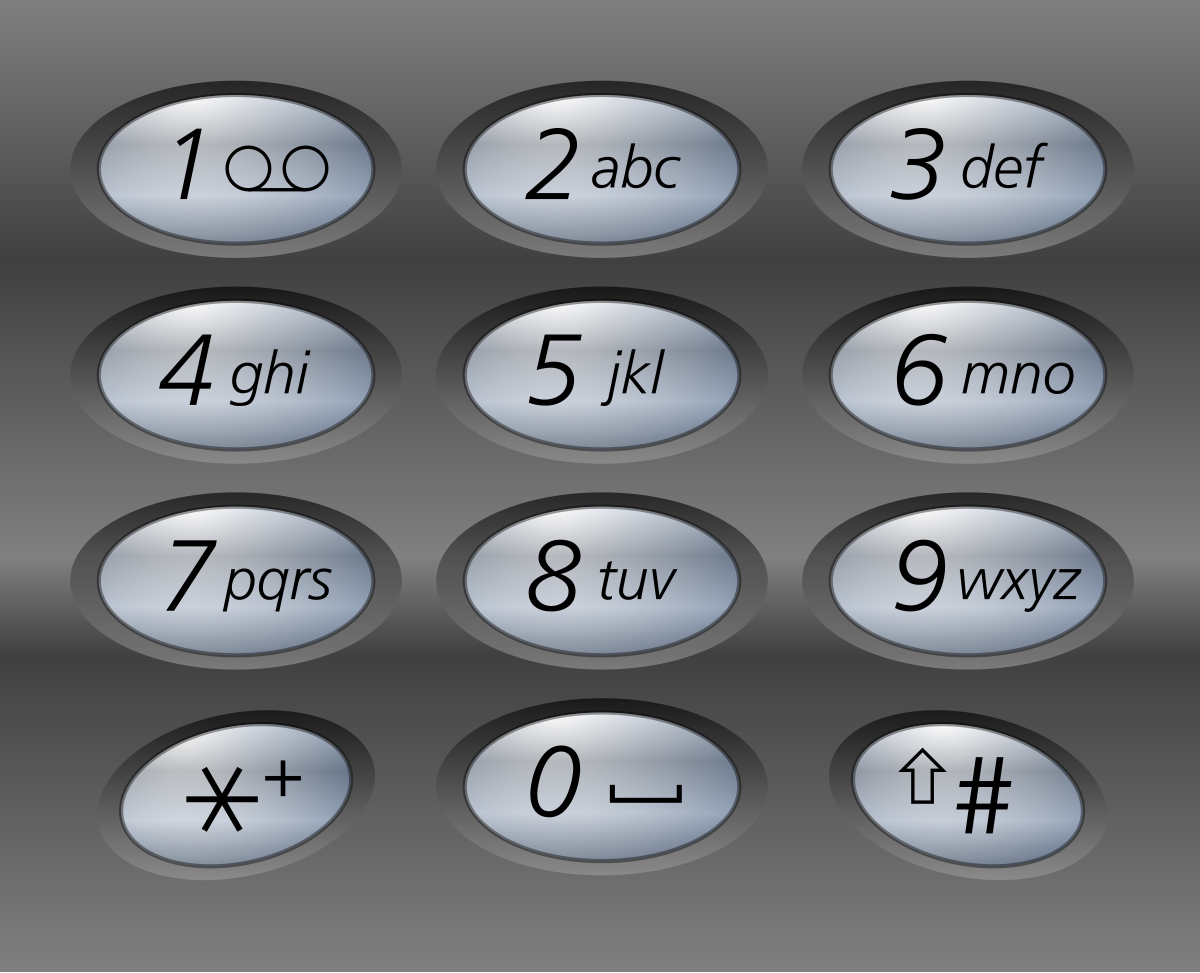
"""
from typing import List
# Backtracking
def letterCombinations(digits: str) -> List[str]:
letter_map = {
"2": "abc",
"3": "def",
"4": "ghi",
"5": "jkl",
"6": "mno",
"7": "pqrs",
"8": "tuv",
"9": "wxyz",
}
n = len(digits)
if n == 0:
return []
res = []
def dfs(idx, path):
if idx == n:
res.append(path)
return None
letters = letter_map[digits[idx]]
for i in range(len(letters)):
dfs(idx + 1, path + letters[i])
dfs(0, "")
return res
if __name__ == "__main__":
assert letterCombinations("23") == [
"ad",
"ae",
"af",
"bd",
"be",
"bf",
"cd",
"ce",
"cf",
]
140. Word Break II
101. Symmetric Tree
from collections import deque
from typing import Optional

from binarytree import Node as TreeNode
from binarytree import build


# Recursive
def is_symmetric_recursive(root: Optional[TreeNode]) -> bool:
    if not root:
        return True

    def check(left, right):
        if left is right:
            return True
        if not left or not right or left.val != right.val:
            return False
        outside = check(left.left, right.right)
        inside = check(left.right, right.left)
        return outside and inside

    return check(root.left, root.right)


# Iterative
def is_symmetric_iterative(root: Optional[TreeNode]) -> bool:
    if not root:
        return True

    q = deque()
    q.append(root.left)
    q.append(root.right)

    while q:
        left = q.popleft()
        right = q.popleft()

        if not left and not right:
            continue

        if not left or not right or left.val != right.val:
            return False

        q.append(left.left)
        q.append(right.right)
        q.append(left.right)
        q.append(right.left)

    return True


if __name__ == "__main__":
    root = [1, 2, 2, 3, 4, 4, 3]
    root = build(root)
    print(root)
    #     __1__
    #    /     \
    #   2       2
    #  / \     / \
    # 3   4   4   3
    assert is_symmetric_recursive(root) is True
    assert is_symmetric_iterative(root) is True
#include <iostream>

#include "include/trees.hpp"

class Solution {
   private:
    bool dfs(TreeNode *Left, TreeNode *Right) {
        if (Left == nullptr && Right == nullptr) return true;
        if (Left == nullptr || Right == nullptr || Left->val != Right->val)
            return false;
        return dfs(Left->left, Right->right) && dfs(Left->right, Right->left);
    }

   public:
    bool isSymmetric(TreeNode *root) {
        return root == nullptr || dfs(root->left, root->right);
    }
};

int main() {
    Solution solution;
    // Test with a symmetric tree
    std::vector<int> values = {1, 2, 2, 3, 4, 4, 3};
    TreeNode *root = TreeUtils::buildTree(values);
    bool result = solution.isSymmetric(root);
    std::cout << "Is symmetric: " << (result ? "true" : "false") << std::endl;
    return 0;
}
237. Delete Node in a Linked List
"""
-   Delete a node in a singly linked list. You are given only the node to be deleted.
"""

from leetpattern.utils import LinkedList, ListNode


def deleteNode(node: ListNode) -> None:
    node.val = node.next.val
    node.next = node.next.next


def test_deleteNode():
    # Test case 1: Delete middle node
    ll = LinkedList([4, 5, 1, 9])
    assert ll.to_array() == [4, 5, 1, 9]
    node = ll.head.next  # node with value 5
    deleteNode(node)
    assert ll.to_array() == [4, 1, 9]

    # Test case 2: Delete another middle node
    ll2 = LinkedList([4, 5, 1, 9])
    node2 = ll2.head.next.next  # node with value 1
    deleteNode(node2)
    assert ll2.to_array() == [4, 5, 9]
284. Peeking Iterator
695. Max Area of Island
from collections import deque
from typing import List


# DFS
def maxAreaOfIslandDFS(grid: List[List[int]]) -> int:
    if not grid:
        return 0

    m, n = len(grid), len(grid[0])

    def dfs(r, c):
        if r < 0 or r >= m or c < 0 or c >= n or grid[r][c] == 0:
            return 0

        grid[r][c] = 0

        return 1 + dfs(r + 1, c) + dfs(r - 1, c) + dfs(r, c + 1) + dfs(r, c - 1)

    res = 0
    for i in range(m):
        for j in range(n):
            if grid[i][j] == 1:
                res = max(res, dfs(i, j))
    return res


# BFS
def maxAreaOfIslandBFS1(grid: List[List[int]]) -> int:
    if not grid:
        return 0

    m, n = len(grid), len(grid[0])
    dirs = [(1, 0), (-1, 0), (0, 1), (0, -1)]
    visited = set()
    res = 0

    def bfs(r, c):
        q = deque([(r, c)])
        area = 0

        while q:
            row, col = q.popleft()
            area += 1

            for dr, dc in dirs:
                nr, nc = row + dr, col + dc

                if (
                    nr < 0
                    or nr >= m
                    or nc < 0
                    or nc >= n
                    or grid[nr][nc] == 0
                    or (nr, nc) in visited
                ):
                    continue

                visited.add((nr, nc))
                q.append((nr, nc))

        return area

    for r in range(m):
        for c in range(n):
            if grid[r][c] == 1 and (r, c) not in visited:
                visited.add((r, c))
                res = max(res, bfs(r, c))

    return res


# BFS + Grid
def numIslandsBFS2(grid: List[List[str]]) -> int:
    if not grid:
        return 0

    m, n = len(grid), len(grid[0])
    dirs = [(1, 0), (-1, 0), (0, 1), (0, -1)]
    res = 0

    def bfs(r, c):
        q = deque([(r, c)])
        area = 0

        while q:
            row, col = q.popleft()
            area += 1

            for dr, dc in dirs:
                nr, nc = row + dr, col + dc

                if nr < 0 or nr >= m or nc < 0 or nc >= n or grid[nr][nc] == 0:
                    continue

                q.append((nr, nc))
                grid[nr][nc] = 0

        return area

    for r in range(m):
        for c in range(n):
            if grid[r][c] == 1:
                grid[r][c] = 0
                res = max(res, bfs(r, c))

    return res


grid = [
    [0, 0, 1, 0, 0, 0, 0, 1, 0, 0, 0, 0, 0],
    [0, 0, 0, 0, 0, 0, 0, 1, 1, 1, 0, 0, 0],
    [0, 1, 1, 0, 1, 0, 0, 0, 0, 0, 0, 0, 0],
    [0, 1, 0, 0, 1, 1, 0, 0, 1, 0, 1, 0, 0],
    [0, 1, 0, 0, 1, 1, 0, 0, 1, 1, 1, 0, 0],
    [0, 0, 0, 0, 0, 0, 0, 0, 0, 0, 1, 0, 0],
    [0, 0, 0, 0, 0, 0, 0, 1, 1, 1, 0, 0, 0],
    [0, 0, 0, 0, 0, 0, 0, 1, 1, 0, 0, 0, 0],
]
print(maxAreaOfIslandDFS(grid))  # 6
print(maxAreaOfIslandBFS1(grid))  # 6
print(numIslandsBFS2(grid))  # 6
#include <algorithm>
#include <cassert>
#include <iostream>
#include <vector>
using namespace std;

class Solution {
   public:
    int max_area_of_island(vector<vector<int>>& grid) {
        int m = grid.size(), n = grid[0].size();
        int res = 0;

        auto dfs = [&](this auto&& dfs, int r, int c) -> int {
            if (r < 0 || r >= m || c < 0 || c >= n || grid[r][c] != 1) {
                return 0;
            }
            grid[r][c] = 0;

            return 1 + dfs(r + 1, c) + dfs(r - 1, c) + dfs(r, c + 1) +
                   dfs(r, c - 1);
        };

        for (int i = 0; i < m; i++) {
            for (int j = 0; j < n; j++) {
                if (grid[i][j] == 1) {
                    int area = dfs(i, j);
                    res = max(res, area);
                }
            }
        }
        return res;
    }
};

int main() {
    Solution solution;
    vector<vector<int>> grid = {{0, 0, 1, 0, 0, 0, 0, 1, 0, 0, 0, 0, 0},
                                {0, 0, 0, 0, 0, 0, 0, 1, 1, 1, 0, 0, 0},
                                {0, 1, 1, 0, 1, 0, 0, 0, 0, 0, 0, 0, 0},
                                {0, 1, 0, 0, 1, 1, 0, 0, 1, 0, 1, 0, 0},
                                {0, 1, 0, 0, 1, 1, 0, 0, 1, 1, 1, 0, 0},
                                {0, 0, 0, 0, 0, 0, 0, 0, 0, 0, 1, 0, 0},
                                {0, 0, 0, 0, 0, 0, 0, 1, 1, 1, 0, 0, 0},
                                {0, 0, 0, 0, 0, 0, 0, 1, 1, 0, 0, 0, 0}};
    assert(solution.max_area_of_island(grid) == 6);
    return 0;
}
349. Intersection of Two Arrays
from typing import List


# Set
def intersectionSet(nums1: List[int], nums2: List[int]) -> List[int]:
    set1 = set(nums1)
    set2 = set(nums2)
    return list(set1 & set2)


# Hash
def intersectionHash(nums1: List[int], nums2: List[int]) -> List[int]:
    set1 = set(nums1)
    result = set()

    for num in nums2:
        if num in set1:
            result.add(num)

    return list(result)


# |------------|------- |---------|
# |  Approach  |  Time  |  Space  |
# |------------|--------|---------|
# |     Set    | O(n+m) |  O(n+m) |
# |    Hash    | O(n+m) |   O(n)  |
# |------------|--------|---------|


nums1 = [1, 2, 2, 1]
nums2 = [2, 2]
print(intersectionSet(nums1, nums2))  # [2]
print(intersectionHash(nums1, nums2))  # [2]
350. Intersection of Two Arrays II
"""
-   Return the intersection of two arrays.
"""

from collections import defaultdict
from typing import List


# Hashmap
def intersect(nums1: List[int], nums2: List[int]) -> List[int]:
    hashmap = defaultdict(int)  # {num: count}
    result = []

    for i in nums1:
        hashmap[i] += 1

    for i in nums2:
        if hashmap[i] > 0:
            result.append(i)
            hashmap[i] -= 1

    return result


# |-------------|-------------|--------------|
# |   Approach  |    Time     |    Space     |
# |-------------|-------------|--------------|
# |   Hashmap   |   O(n + m)  | O(min(n, m)) |
# |-------------|-------------|--------------|

nums1 = [1, 2, 2, 1]
nums2 = [2, 2]
print(intersect(nums1, nums2))  # [2, 2]
322. Coin Change
from typing import List


def coinChange(coins: List[int], amount: int) -> int:
    dp = [float("inf") for _ in range(amount + 1)]

    dp[0] = 0

    for i in range(1, amount + 1):
        for c in coins:
            if i - c >= 0:
                dp[i] = min(dp[i], 1 + dp[i - c])

    return dp[amount] if dp[amount] != float("inf") else -1


coins = [1, 2, 5]
amount = 11
print(coinChange(coins, amount))  # 3
460. LFU Cache
from collections import OrderedDict, defaultdict


class LFUCache:
    def __init__(self, capacity: int):
        self.cap = capacity
        # key -> [val, freq]
        self.key_to_val_freq = {}
        # freq -> OrderedDict of keys
        self.freq_to_keys = defaultdict(OrderedDict)
        self.min_freq = 0

    def remove_least_frequent(self):

        lfu_key, _ = self.freq_to_keys[self.min_freq].popitem(last=False)
        del self.key_to_val_freq[lfu_key]

        # If the frequency list is empty after removal, delete it
        if not self.freq_to_keys[self.min_freq]:
            del self.freq_to_keys[self.min_freq]

    def update_freq(self, key):
        """Updates the frequency of an existing key."""
        value, freq = self.key_to_val_freq[key]

        # Remove key from current frequency group
        del self.freq_to_keys[freq][key]
        if not self.freq_to_keys[freq]:
            del self.freq_to_keys[freq]
            if self.min_freq == freq:
                self.min_freq += 1

        # Update key frequency
        new_freq = freq + 1
        self.key_to_val_freq[key] = [value, new_freq]
        self.freq_to_keys[new_freq][key] = None

    def add_new_key(self, key, value):
        if len(self.key_to_val_freq) >= self.cap:
            self.remove_least_frequent()

        # Insert the new key with frequency 1
        self.key_to_val_freq[key] = [value, 1]
        self.freq_to_keys[1][key] = None
        self.min_freq = 1

    def get(self, key: int) -> int:
        if key not in self.key_to_val_freq:
            return -1
        self.update_freq(key)
        return self.key_to_val_freq[key][0]

    def put(self, key: int, value: int) -> None:
        if self.cap == 0:
            return

        if key in self.key_to_val_freq:
            self.key_to_val_freq[key][0] = value
            self.update_freq(key)
        else:
            self.add_new_key(key, value)


lfu = LFUCache(2)
lfu.put(1, 1)
lfu.put(2, 2)
print(lfu.get(1))  # 1
lfu.put(3, 3)
print(lfu.get(2))  # -1
print(lfu.get(3))  # 3
lfu.put(4, 4)
print(lfu.get(1))  # -1
print(lfu.get(3))  # 3
973. K Closest Points to Origin
-
Tags: Array, Math, Divide And Conquer, Geometry, Sorting, Heap Priority Queue, Quickselect
import heapq
from typing import List


def kClosest(points: List[List[int]], k: int) -> List[List[int]]:
    heap = []

    for x, y in points:
        dist = -(x**2 + y**2)  # max heap
        if len(heap) < k:
            heapq.heappush(heap, (dist, x, y))
        else:
            heapq.heappushpop(heap, (dist, x, y))  # push and pop the smallest

    return [[x, y] for (_, x, y) in heap]


# Time complexity: O(n * log(k))
#   - O(log(k)) for heapify
#   - O(n) for iterating through the input list
# Space complexity: O(k)

points = [[1, 3], [-2, 2]]
k = 1
print(kClosest(points, k))  # [[-2, 2]]
1296. Divide Array in Sets of K Consecutive Numbers
62. Unique Paths
"""
- Count the number of unique paths to reach the bottom-right corner of a `m x n` grid.
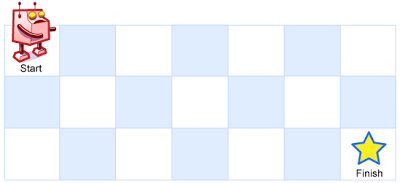
"""
# DP - 2D
def uniquePaths(m: int, n: int) -> int:
if m == 1 or n == 1:
return 1
dp = [[1] * n for _ in range(m)]
for i in range(1, m):
for j in range(1, n):
dp[i][j] = dp[i - 1][j] + dp[i][j - 1]
return dp[-1][-1]
print(uniquePaths(m=3, n=7)) # 28
# [[1, 1, 1, 1, 1, 1, 1],
# [1, 2, 3, 4, 5, 6, 7],
# [1, 3, 6, 10, 15, 21, 28]]
#include <iostream>
#include <vector>
using namespace std;

int uniquePaths(int m, int n) {
    vector dp(m, vector<int>(n, 1));

    for (int i = 1; i < m; i++) {
        for (int j = 1; j < n; j++) {
            dp[i][j] = dp[i - 1][j] + dp[i][j - 1];
        }
    }

    return dp[m - 1][n - 1];
}

int main() {
    int m = 3, n = 7;
    cout << uniquePaths(m, n) << endl;  // 28
    return 0;
}
63. Unique Paths II
from functools import cache
from typing import List


class UniquePathsWithObstacles:
    def memoization(self, obstacleGrid: List[List[int]]) -> int:
        """
        Approach: DFS with Memoization
        Time complexity: O(mn).
        Space complexity: O(mn).
        """

        @cache
        def dfs(i: int, j: int) -> int:
            if i < 0 or j < 0 or obstacleGrid[i][j]:
                return 0
            if i == 0 and j == 0:
                return 1
            return dfs(i - 1, j) + dfs(i, j - 1)

        m, n = len(obstacleGrid), len(obstacleGrid[0])
        return dfs(m - 1, n - 1)

    def dp_2d(self, obstacleGrid: List[List[int]]) -> int:
        """
        Approach: 2D Dynamic Programming
        Time complexity: O(mn).
        Space complexity: O(mn).
        """
        # edge cases
        if obstacleGrid[0][0] == 1 or obstacleGrid[-1][-1] == 1:
            return 0

        m, n = len(obstacleGrid), len(obstacleGrid[0])

        # init dp
        dp = [[0] * n for _ in range(m)]

        for i in range(m):
            if obstacleGrid[i][0] == 0:
                dp[i][0] = 1
            else:
                break

        for j in range(n):
            if obstacleGrid[0][j] == 0:
                dp[0][j] = 1
            else:
                break

        # update dp
        for i in range(1, m):
            for j in range(1, n):
                if obstacleGrid[i][j] == 1:
                    continue
                dp[i][j] = dp[i - 1][j] + dp[i][j - 1]

        return dp[-1][-1]

    def dp_1d(self, obstacleGrid: List[List[int]]) -> int:
        """
        Approach: 1D Dynamic Programming
        Time complexity: O(mn).
        Space complexity: O(n).
        """
        n = len(obstacleGrid[0])
        dp = [0] * (n + 1)
        dp[1] = 1

        for row in obstacleGrid:
            for j, x in enumerate(row):
                if x == 0:
                    dp[j + 1] += dp[j]
                else:
                    dp[j + 1] = 0
        return dp[n]


if __name__ == "__main__":
    solution = UniquePathsWithObstacles()
    obstacleGrid = [[0, 0, 0], [0, 1, 0], [0, 0, 0]]
    assert solution.dp_2d(obstacleGrid) == 2
    assert solution.memoization(obstacleGrid) == 2
    assert solution.dp_1d(obstacleGrid) == 2
980. Unique Paths III
75. Sort Colors
from copy import deepcopy
from typing import List


# Left Right Pointers
def sort_colors_lr_pointers(nums: List[int]) -> None:
    """
    Do not return anything, modify nums in-place instead.
    """
    n = len(nums)
    left = 0
    for right in range(n):
        if nums[right] == 0:
            nums[left], nums[right] = nums[right], nums[left]
            left += 1

    for right in range(left, n):
        if nums[right] == 1:
            nums[left], nums[right] = nums[right], nums[left]
            left += 1


# Three Pointers
def sort_colors_three_pointers(nums: List[int]) -> None:
    """
    Do not return anything, modify nums in-place instead.
    """
    left, right = 0, len(nums) - 1
    cur = 0

    while cur <= right:
        if nums[cur] == 0:
            nums[left], nums[cur] = nums[cur], nums[left]
            left += 1
            cur += 1
        elif nums[cur] == 2:
            nums[right], nums[cur] = nums[cur], nums[right]
            right -= 1
        else:
            cur += 1


nums = [2, 0, 2, 1, 1, 0]
nums1, nums2 = deepcopy(nums), deepcopy(nums)
sort_colors_lr_pointers(nums1)
print(nums1)  # [0, 0, 1, 1, 2, 2]
sort_colors_three_pointers(nums2)
print(nums2)  # [0, 0, 1, 1, 2, 2]
79. Word Search
from typing import List


def exist(board: List[List[str]], word: str) -> bool:
    m, n = len(board), len(board[0])
    path = set()
    dirs = ((0, 1), (1, 0), (0, -1), (-1, 0))

    def dfs(r, c, i):
        if i == len(word):
            return True

        if r < 0 or r >= m or c < 0 or c >= n or board[r][c] != word[i] or (r, c) in path:
            return False

        path.add((r, c))

        for dr, dc in dirs:
            if dfs(r + dr, c + dc, i + 1):
                return True

        path.remove((r, c))
        return False

    for i in range(m):
        for j in range(n):
            if dfs(i, j, 0):
                return True

    return False


board = [
    ["A", "B", "C", "E"],
    ["S", "F", "C", "S"],
    ["A", "D", "E", "E"],
]
word = "ABCCED"
print(exist(board, word))  # True
535. Encode and Decode TinyURL
64. Minimum Path Sum
from functools import cache
from typing import List


# Iterative
def minPathSum(grid: List[List[int]]) -> int:
    m, n = len(grid), len(grid[0])

    # init
    dp = [[0] * n for _ in range(m)]
    dp[0][0] = grid[0][0]

    for i in range(1, m):
        dp[i][0] = grid[i][0] + dp[i - 1][0]
    for j in range(1, n):
        dp[0][j] = grid[0][j] + dp[0][j - 1]

    # update
    for i in range(1, m):
        for j in range(1, n):
            dp[i][j] = grid[i][j] + min(dp[i - 1][j], dp[i][j - 1])

    return dp[-1][-1]


# Recursive
def minPathSumDFS(grid: List[List[int]]) -> int:
    INF = 10**18

    @cache
    def dfs(i, j):
        if i < 0 or j < 0:
            return INF
        if i == 0 and j == 0:
            return grid[i][j]
        return min(dfs(i, j - 1), dfs(i - 1, j)) + grid[i][j]

    return dfs(len(grid) - 1, len(grid[0]) - 1)


grid = [[1, 3, 1], [1, 5, 1], [4, 2, 1]]
print(minPathSum(grid))  # 7
print(minPathSumDFS(grid))  # 7
133. Clone Graph
from collections import deque
from typing import Optional


class Node:
    def __init__(self, val=0, neighbors=None):
        self.val = val
        self.neighbors = neighbors if neighbors is not None else []


class CloneGraph:
    def dfs(self, node: Optional["Node"]) -> Optional["Node"]:
        hashmap = {}

        def dfs(node):
            if node in hashmap:
                return hashmap[node]

            res = Node(node.val)
            hashmap[node] = res

            for nei in node.neighbors:
                res.neighbors.append(dfs(nei))

            return res

        return dfs(node) if node else None

    def bfs(self, node: Optional["Node"]) -> Optional["Node"]:
        if not node:
            return None

        hashmap = {node: Node(node.val)}
        q = deque([node])

        while q:
            cur = q.popleft()

            for nei in cur.neighbors:
                if nei not in hashmap:
                    hashmap[nei] = Node(nei.val)
                    q.append(nei)

                hashmap[cur].neighbors.append(hashmap[nei])

        return hashmap[node]
238. Product of Array Except Self
"""
-   Classic **Prefix Sum** problem
-   Return an array `output` such that `output[i]` is equal to the product of all the elements of `nums` except `nums[i]`.

| Approach           | Time | Space |
| ------------------ | ---- | ----- |
| Prefix             | O(n) | O(n)  |
| Prefix (Optimized) | O(n) | O(1)  |
"""

from typing import List


# Prefix
def productExceptSelf(nums: List[int]) -> List[int]:
    n = len(nums)
    prefix = [1 for _ in range(n)]
    suffix = [1 for _ in range(n)]

    for i in range(1, n):
        prefix[i] = nums[i - 1] * prefix[i - 1]

    for i in range(n - 2, -1, -1):
        suffix[i] = nums[i + 1] * suffix[i + 1]

    result = [i * j for i, j in zip(prefix, suffix)]

    return result


# Prefix (Optimized)
def productExceptSelfOptimized(nums: List[int]) -> List[int]:
    n = len(nums)
    result = [1 for _ in range(n)]

    prefix = 1
    for i in range(n):
        result[i] = prefix
        prefix *= nums[i]

    suffix = 1
    for i in range(n - 1, -1, -1):
        result[i] *= suffix
        suffix *= nums[i]

    return result


print(productExceptSelf([1, 2, 3, 4]))
# [24, 12, 8, 6]
print(productExceptSelfOptimized([1, 2, 3, 4]))
# [24, 12, 8, 6]
#include <cassert>
#include <iostream>
#include <vector>
using namespace std;

class Solution {
   public:
    vector<int> productExceptSelf(vector<int> &nums) {
        int n = nums.size();
        vector<int> prefix(n, 1);
        vector<int> suffix(n, 1);
        vector<int> res(n, 1);

        for (int i = 1; i < n; i++) {
            prefix[i] = prefix[i - 1] * nums[i - 1];
        }

        for (int i = n - 2; i >= 0; i--) {
            suffix[i] = suffix[i + 1] * nums[i + 1];
        }

        for (int i = 0; i < n; i++) {
            res[i] = prefix[i] * suffix[i];
        }
        return res;
    }
};

int main() {
    vector<int> nums = {1, 2, 3, 4};
    Solution obj;
    vector<int> result = obj.productExceptSelf(nums);
    assert(result == vector<int>({24, 12, 8, 6}));
    return 0;
}
268. Missing Number
from typing import List


# Math
def missingNumberMath(nums: List[int]) -> int:
    n = len(nums)
    return (n * (n + 1)) // 2 - sum(nums)


# Bit Manipulation (XOR)
def missingNumberXOR(nums: List[int]) -> int:
    n = len(nums)

    for i, num in enumerate(nums):
        n ^= i ^ num

    return n


nums = [3, 0, 1]
print(missingNumberMath(nums))  # 2
print(missingNumberXOR(nums))  # 2
136. Single Number
from functools import reduce
from operator import xor
from typing import List


# XOR
def singleNumber(nums: List[int]) -> int:
    res = 0
    for num in nums:
        res ^= num
    return res


# XOR
def singleNumberXOR(nums: List[int]) -> int:
    return reduce(xor, nums)


# XOR
def singleNumberXORLambda(nums: List[int]) -> int:
    return reduce(lambda x, y: x ^ y, nums)


nums = [4, 1, 2, 1, 2]
print(singleNumber(nums))  # 4
print(singleNumberXOR(nums))  # 4
print(singleNumberXORLambda(nums))  # 4
572. Subtree of Another Tree
from typing import Optional

from binarytree import Node as TreeNode
from binarytree import build


# DFS - Tree
def isSubtree(root: Optional[TreeNode], subRoot: Optional[TreeNode]) -> bool:
    def isSameTree(p, q):
        if not p and not q:
            return True
        if not p or not q:
            return False
        if p.val != q.val:
            return False

        return isSameTree(p.left, q.left) and isSameTree(p.right, q.right)

    if not root:
        return False

    return (
        isSameTree(root, subRoot)
        or isSubtree(root.left, subRoot)
        or isSubtree(root.right, subRoot)
    )


# |------------|---------|----------|
# | Approach   | Time    | Space    |
# |------------|---------|----------|
# | DFS        | O(n * m)| O(n)     |
# |------------|---------|----------|


root = build([3, 4, 5, 1, 2, None, None, None, None, 0])
subRoot = build([4, 1, 2])
print(root)
#     ____3
#    /     \
#   4__     5
#  /   \
# 1     2
#      /
#     0
print(subRoot)
#   4
#  / \
# 1   2
print(isSubtree(root, subRoot))  # False
543. Diameter of Binary Tree
from typing import Optional

from binarytree import Node as TreeNode
from binarytree import build


# Tree DFS
class Solution:
    def diameterOfBinaryTree(self, root: Optional[TreeNode]) -> int:
        self.diameter = 0

        def dfs(node):
            if not node:
                return 0
            left = dfs(node.left)
            right = dfs(node.right)

            self.diameter = max(self.diameter, left + right)

            return 1 + max(left, right)

        dfs(root)

        return self.diameter


root = build([1, 2, 3, 4, 5])
print(root)
#     __1
#    /   \
#   2     3
#  / \
# 4   5
obj = Solution()
print(obj.diameterOfBinaryTree(root))  # 3
#include <algorithm>
#include <iostream>
using namespace std;

struct TreeNode {
    int val;
    TreeNode* left;
    TreeNode* right;
    TreeNode() : val(0), left(nullptr), right(nullptr) {}
    TreeNode(int x) : val(x), left(nullptr), right(nullptr) {}
    TreeNode(int x, TreeNode* left, TreeNode* right)
        : val(x), left(left), right(right) {}
};

int diameterOfBinaryTree(TreeNode* root) {
    int diameter = 0;

    auto dfs = [&](auto&& self, TreeNode* node) -> int {
        if (!node) return 0;
        int left = self(self, node->left);
        int right = self(self, node->right);

        diameter = max(diameter, left + right);

        return 1 + max(left, right);
    };

    dfs(dfs, root);
    return diameter;
}

int main() {
    // [1, 2, 3, 4, 5]
    TreeNode* root = new TreeNode(1);
    root->left = new TreeNode(2);
    root->right = new TreeNode(3);
    root->left->left = new TreeNode(4);
    root->left->right = new TreeNode(5);
    cout << diameterOfBinaryTree(root) << endl;  // 3

    return 0;
}
1245. Tree Diameter 👑
from collections import defaultdict, deque
from typing import List


# Tree Diameter
def treeDiameter(edges: List[List[int]]) -> int:
    graph = defaultdict(list)
    for u, v in edges:
        graph[u].append(v)
        graph[v].append(u)

    visited = {0}
    q = deque([0])
    cur = 0

    while q:
        size = len(q)
        for _ in range(size):
            cur = q.popleft()
            for nxt in graph[cur]:
                if nxt not in visited:
                    q.append(nxt)
                    visited.add(nxt)

    visited = {cur}
    q = deque([cur])
    res = -1

    while q:
        size = len(q)
        for _ in range(size):
            cur = q.popleft()
            for nxt in graph[cur]:
                if nxt not in visited:
                    q.append(nxt)
                    visited.add(nxt)
        res += 1

    return res


edges = [[0, 1], [1, 2], [2, 3], [1, 4], [4, 5]]
assert treeDiameter(edges) == 4
257. Binary Tree Paths
from typing import List, Optional

from binarytree import Node as TreeNode
from binarytree import build


# Recursive
def binaryTreePaths(root: Optional[TreeNode]) -> List[str]:
    res = []

    def dfs(node, path):
        if not node:
            return
        path += str(node.val)

        if not node.left and not node.right:
            res.append(path)
            return

        path += "->"

        dfs(node.left, path)
        dfs(node.right, path)

    dfs(root, "")

    return res


root = build([1, 2, 3, None, 5])
print(root)
#   __1
#  /   \
# 2     3
#  \
#   5
print(binaryTreePaths(root))  # ['1->2->5', '1->3']
545. Boundary of Binary Tree 👑
490. The Maze 👑
from collections import deque
from typing import List


# BFS
def hasPathBFS(maze: List[List[int]], start: List[int], destination: List[int]) -> bool:
    m, n = len(maze), len(maze[0])
    dirs = [[1, 0], [0, 1], [-1, 0], [0, -1]]
    q = deque([start])
    maze[start[0]][start[1]] = -1

    while q:
        r, c = q.popleft()
        if [r, c] == destination:
            return True

        for dr, dc in dirs:
            nr, nc = r, c

            while 0 <= nr + dr < m and 0 <= nc + dc < n and maze[nr + dr][nc + dc] != 1:
                nr += dr
                nc += dc

            if maze[nr][nc] != -1:
                q.append([nr, nc])
                maze[nr][nc] = -1

    return False


maze = [
    [0, 0, 1, 0, 0],
    [0, 0, 0, 0, 0],
    [0, 0, 0, 1, 0],
    [1, 1, 0, 1, 1],
    [0, 0, 0, 0, 0],
]
start = [0, 4]
destination = [4, 4]
print(hasPathBFS(maze, start, destination))  # True
505. The Maze II 👑
-
Tags: Array, Depth First Search, Breadth First Search, Graph, Heap Priority Queue, Matrix, Shortest Path
import heapq
from typing import List


# Dijkstra
def shortestDistance(
    maze: List[List[int]], start: List[int], destination: List[int]
) -> int:
    directions = [(0, 1), (0, -1), (1, 0), (-1, 0)]
    m, n = len(maze), len(maze[0])

    dist = [[float("inf")] * n for _ in range(m)]
    dist[start[0]][start[1]] = 0

    heap = [(0, start[0], start[1])]

    while heap:
        d, r, c = heapq.heappop(heap)

        if [r, c] == destination:
            return d

        for dr, dc in directions:
            nr, nc, nd = r, c, d

            while 0 <= nr + dr < m and 0 <= nc + dc < n and maze[nr + dr][nc + dc] == 0:
                nr += dr
                nc += dc
                nd += 1

            if nd < dist[nr][nc]:
                dist[nr][nc] = nd
                heapq.heappush(heap, (nd, nr, nc))

    return -1


maze = [
    [0, 0, 1, 0, 0],
    [0, 0, 0, 0, 0],
    [0, 0, 0, 1, 0],
    [1, 1, 0, 1, 1],
    [0, 0, 0, 0, 0],
]
start = [0, 4]
destination = [4, 4]
print(shortestDistance(maze, start, destination))  # 12